
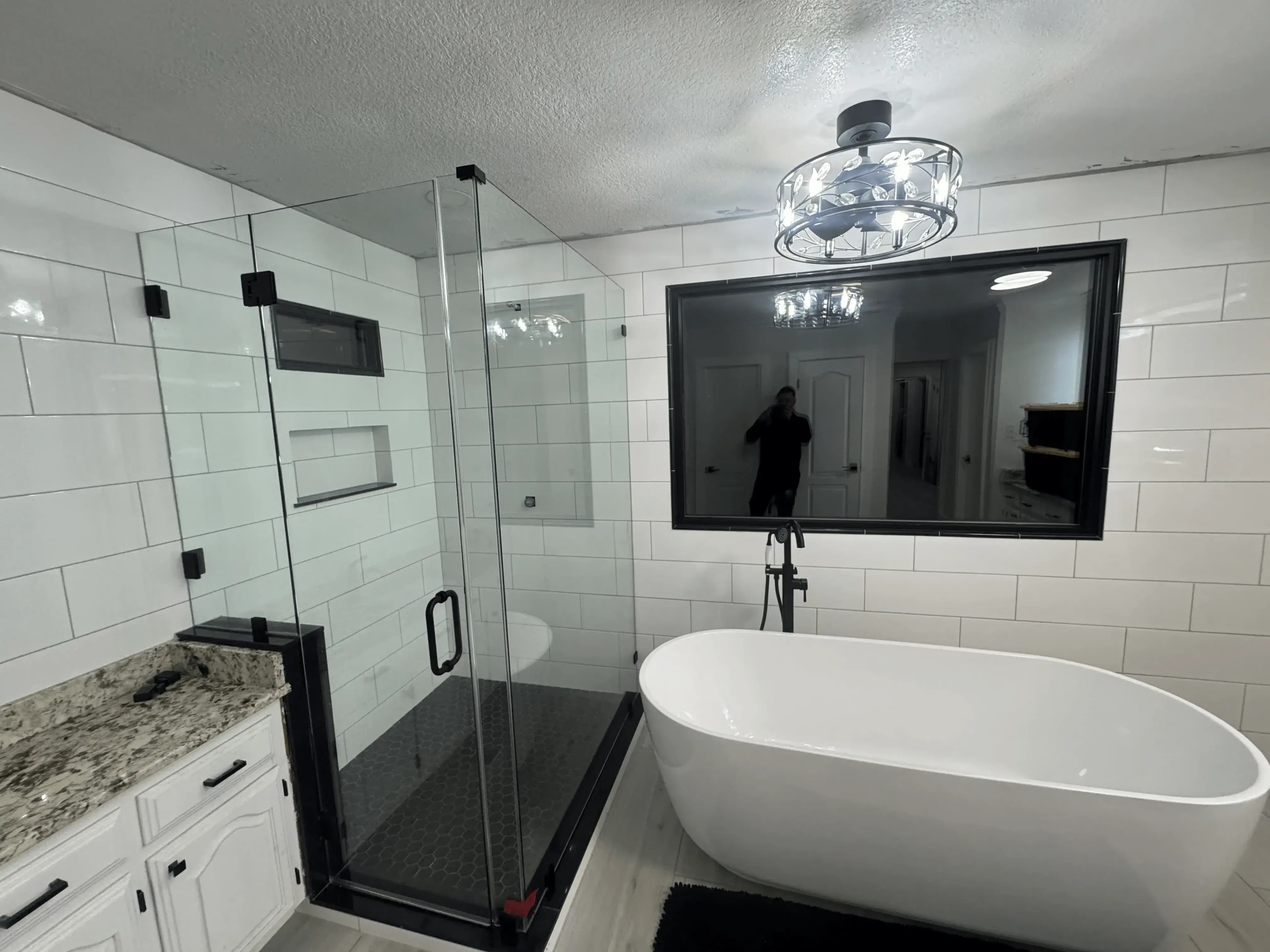

Water escaping a shower enclosure is one of the most common complaints bathroom owners report, and it rarely comes down to bad luck. In most Bee Cave homes, splashing traces back to a handful of fixable factors: the layout of the shower itself, the direction the door swings, and how tightly the seals fit against the glass. Shower glass installation, when it accounts for these three elements together, can solve a problem that extra towels and bath mats never really fix. Understanding how layout, door swing, and seals interact is the first step toward a shower that keeps water exactly where it belongs.
It is tempting to assume that splashing is simply a fact of life in an open, modern bathroom, especially one built around frameless shower doors or a large custom glass shower. In reality, most escaping water can be traced to a specific gap, angle, or hardware choice made during the original build. That is precisely where a careful shower glass installation makes the difference between a bathroom that constantly needs mopping and one that stays dry outside the enclosure, no matter how the household uses it.
Why Shower Glass Installation Is About More Than Just the Glass
Homeowners often assume that any leaking or splashing issue is a plumbing problem, tied to water pressure or an aging showerhead. In practice, the panel configuration and the way the enclosure was measured and set are usually the real culprits. A poorly planned shower glass installation can leave a quarter-inch gap in exactly the spot where a showerhead sprays hardest, and no amount of pressure adjustment will fix that on its own.
This is where the difference between a generic enclosure and a properly engineered one becomes obvious. Sliding glass shower doors, for example, rely on tracks and rollers that have to be leveled with real precision, because even a slight tilt sends water pooling toward one edge of the frame instead of draining back into the pan. Frameless shower doors solve some of these problems by removing bulky tracks altogether, but they introduce their own challenge: without a frame to contain runoff, the glass panel itself, its width, its swing clearance, and its edge finishing, has to do all the work of keeping water inside.
Local teams who specialize in this kind of work, including Austin Shower Glass, spend a significant part of every job simply measuring: door swing radius, the angle of the shower pan slope, the placement of the showerhead relative to the seam between panels. That groundwork rarely gets noticed by the homeowner, but it is the foundation that determines whether a bathroom stays dry for the next decade or starts showing water stains on the floor within a few months. Austin Shower Glass technicians working across Bee Cave routinely find that splashing complaints trace back to enclosures that were installed quickly, without accounting for how a specific family actually showers day to day.
Walk-in shower glass Bee Cave projects tend to raise this issue most often, since an open, low-threshold design offers no curtain or extra barrier to catch overspray. Without a properly sequenced shower door installation, an open-concept enclosure can look stunning in photos and still send water across the floor within the first week of daily use. That gap between appearance and function is exactly why Austin Shower Glass approaches every project as a layout exercise first, with glass selection and hardware finish decided only after the water path has been mapped out.
How Door Swing and Layout Decide Where a Shower Glass Installation Sends Water
Door swing sounds like a minor detail, but it has an outsized effect on how much water stays contained. An outward-swinging door on a walk-in shower glass enclosure can create a small but persistent gap at the hinge side, particularly if the surrounding wall or half-wall was not framed with the swing radius in mind. Over time, that gap becomes the exact spot where water escapes onto the bathroom floor, especially in showers used by more than one person with different height and spray habits.
Layout matters just as much. A shower glass installation that positions the showerhead directly opposite a door opening, rather than angled toward a fixed panel, is almost guaranteed to send spray toward the exit point every time someone showers. Reworking that layout, even slightly, by adjusting the showerhead angle or reorienting one of the glass shower wall panels, often resolves splashing complaints that homeowners assumed required a full remodel. Glass shower wall panels positioned even a few degrees differently can redirect an entire spray pattern back toward the drain instead of toward the door. This is one of the more overlooked benefits of working with a team that treats every enclosure as a layout problem first and a glass problem second, and it is a habit Austin Shower Glass built its reputation on across Bee Cave bathrooms of every size.
For many Bee Cave households, the practical fix is simpler than expected: swap a single fixed panel for a slightly wider one, adjust where the door hinge sits, and reroute the water path away from the opening. It is a small change with an outsized result, and it is a large part of why a thoughtful shower glass installation outperforms a quick, off-the-shelf enclosure swap.
The Role of Seals, Sweeps, and Precision Measurements in Shower Glass Installation
Even a perfectly angled, well laid out enclosure will leak if the seals are wrong. Door sweeps, magnetic strips, and vinyl seals are the unglamorous parts of any shower glass installation, but they are often the single biggest factor separating a dry bathroom from a wet one. A sweep that sits even an eighth of an inch too high off the shower pan will let a steady trickle of water pass underneath it every single time the shower runs.
This is also where the difference between bathroom glass door installation done to exact specifications and a rushed job becomes visible fast. Modern shower glass TX projects increasingly favor minimal hardware and clean sightlines, which looks striking but leaves very little margin for error in the seal work. There is no bulky frame to catch stray water if the seal is off. That is why proper shower enclosure installation TX work leans so heavily on custom measurements rather than stock parts: pan slopes vary from house to house, and a seal cut for a standard enclosure rarely performs as well as one cut to the actual contours of a specific bathroom.
Regular maintenance plays a role too. Seals wear down over years of exposure to water, soap residue, and temperature changes, and a shower that used to stay perfectly dry can start splashing again simply because the sweep has degraded. Recognizing that difference, between a design flaw and a maintenance issue, is part of what separates an experienced installer from a general contractor handling glass as an afterthought. Austin Shower Glass technicians are trained to check both possibilities on every service call, since assuming a leak is purely cosmetic can leave the actual cause unaddressed for months.
This is also where precision pays for itself over time. A shower glass installation measured to the eighth of an inch, with seals cut for the exact pan slope of that bathroom rather than a generic template, holds up far longer under daily use than a stock enclosure ever will. It costs nothing extra in appearance, yet it changes how the bathroom performs every single day for years afterward.
What Local Shower Glass Experts Check Before a Shower Glass Installation Begins
Local shower glass experts typically walk through a bathroom several times before cutting a single piece of glass. They study where water naturally wants to travel given the pan slope, they check how the door will swing relative to nearby fixtures, and they map out exactly where seals need to sit for that specific layout. This groundwork is standard practice for teams like Austin Shower Glass, whose Bee Cave shower glass company crews treat every splashing complaint as a diagnostic problem before it becomes a glass order.
One employee at Austin Shower Glass described a job that stuck with them long after it wrapped up. A family had been dealing with water pooling outside their shower for nearly two years, mopping the floor every single morning before anyone in the house could safely walk across it. After a proper shower glass installation that repositioned the door swing and corrected a seal that had never fit the pan slope correctly, the employee returned for a routine follow-up visit and found the homeowner nearly in tears, explaining that it was the first dry bathroom floor she had woken up to in years. Moments like that are why the work feels meaningful. It is easy to think of glass and seals as small technical details, but for the people living with the results, getting it right changes something they deal with every single day.
That same attention to detail carries through to more specialized requests. A glass shower remodel TX project might involve upgrading dated tile-and-curtain setups into a full custom glass shower, while a shower glass repair Bee Cave call might involve nothing more than replacing a worn sweep or realigning a panel that has shifted slightly over time. Whether the project is a full custom frameless glass TX installation or a smaller repair, the same core principles apply: layout first, door swing second, seals last but never skipped. Luxury shower glass TX builds tend to get the most attention for their design, but the difference between a beautiful enclosure and a beautiful, dry enclosure almost always comes down to that sequence.
Splashing is rarely just an annoyance to be tolerated. It is usually a signal that one of three things needs attention: the layout, the door swing, or the seals. A thoughtful shower glass installation addresses all three together rather than treating them as separate problems, and that is often the difference between a bathroom that needs constant upkeep and one that simply works, day after day, without a second thought.


